
What Static Pressure Measures
Static pressure is the pressure exerted by air against the walls of a duct — measured in inches of water column (in. wc.). It's the resistance the blower has to work against to move air through the system.
High static pressure = high resistance = less airflow.
Every air handler and furnace has a maximum rated external static pressure — typically 0.50 in. wc. for residential equipment. When total external static pressure exceeds this rating, airflow drops below design, equipment efficiency drops, and the system can eventually suffer damage.
The Four-Point Test
The basic static pressure test uses a manometer and two static pressure tips. You measure at the supply plenum (downstream of the filter/coil) and the return plenum (before the filter).
With the system running, insert the static pressure tips into both plenums. Measure simultaneously if your manometer allows.
Total External Static Pressure (TESP) = supply static + absolute value of return static
Compare TESP to the equipment's rated maximum. If you're at 0.65 on equipment rated for 0.50, you have a problem.
Reading the Numbers
High return static (negative): Undersized return, blocked return, or too few return registers. This is the most common finding. Many residential systems are dramatically undersized on the return side.
High supply static: Undersized supply ductwork, closed or throttled dampers, or excessive duct length with too many elbows.
High filter drop: Dirty filter, or a filter that's too restrictive for the system's airflow needs. High-MERV filters on systems not designed for them cause significant restriction.
Low TESP with poor performance: If static pressure is fine but the system isn't performing, look at equipment problems, refrigerant charge, or a coil issue.
Common Findings and Fixes
Undersized return: The most common. Symptoms are uneven temperatures, long cycles without reaching setpoint, high humidity. Fix: add return pathways, cut in additional return grilles, install transfer grilles between rooms with closed doors.
Restricted supply duct: Find the restriction — often a collapsed flex duct section, a too-tight bend, or an undersized main trunk. Flex duct compressed in an attic is extremely common.
Wrong filter: A MERV-13 filter on a system designed for MERV-8 will drop 0.20-0.30 in. wc. on its own. Educate the customer and replace with an appropriate filter.
Why This Matters
A system running at high static pressure is not just inefficient — it's at risk. Variable-speed motors can compensate temporarily by running at higher speeds, which increases motor wear. Heat exchangers in furnaces can overheat from low airflow, eventually cracking. Evaporator coils can freeze from insufficient airflow.
Static pressure testing should be part of every new installation verification and every diagnostic call where the system isn't performing as expected. The tools cost under $200. The knowledge pays for itself on the first callback you prevent.
Was this helpful?
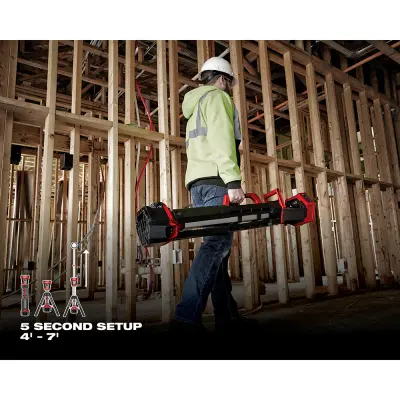
M18 ROCKET™ Tower Light
5-second setup. The jobsite light every tech needs.
Shop at Home Depot →Keep Reading

Got a question? A funny story? A win from the field?
Drop your email and share what's on your mind. Best questions become articles.