
Here's something nobody tells you when you start doing in-home sales: the homeowner does not care about the equipment. Not really. They don't care about SEER ratings, they don't care about two-stage compression, and they definitely don't care about AHRI-matched systems.
What they care about is whether they're going to be comfortable next summer. Whether their energy bill is going to go down. Whether this is going to break again in two years and cost them another four grand.
The faster you internalize that, the more jobs you'll close.
Why Techs Default to Specs
It makes sense that we lead with technical details. You spent years learning this stuff. You know exactly what a 96% AFUE furnace does and why it matters. You're proud of that knowledge — you should be.
But here's the problem: when you walk into a homeowner's kitchen and start explaining variable-speed motors and communicating thermostats, you've lost them by the second sentence. They nod along, but they're not following you. And when someone doesn't understand what they're buying, they stall. "I need to get another quote." "Let me talk to my husband." "I need to think about it."
That's not a pricing problem. That's a communication problem.
What Homeowners Actually Buy
People buy feelings, not features. Every purchase comes down to how something is going to make their life better. Your job isn't to educate them on HVAC technology — it's to connect what you're selling to what they already want.
Most homeowners want four things:
- Comfort — no more hot spots, cold rooms, or waking up at 3am because the bedroom is 59 degrees
- Lower bills — they've been paying too much and they know it
- Reliability — they don't want to be in this situation again next winter
- Peace of mind — they want to trust the person they're buying from
Every piece of equipment you sell hits at least one of those. Your job is to make that connection explicit.
The Shift in Practice
Let me show you what this looks like in actual conversation. Here's how most techs present a high-efficiency system:
"This is a 96% AFUE, two-stage gas furnace with a variable-speed ECM blower. It's going to be a lot more efficient than your current unit."
Now here's the same thing translated into outcomes:
"This furnace runs in a low stage about 80% of the time — so instead of blasting heat and shutting off, it kind of hums along quietly and keeps the temperature rock-steady. Your house stays more comfortable, it's quieter, and because it's not constantly starting and stopping, your energy bill drops. Most customers tell me they notice the difference the first month."
Same equipment. Completely different conversation. One requires the homeowner to translate specs into benefits on their own. The other does it for them.
Phrases You Can Use Right Now
You don't need to reinvent your pitch from scratch. You just need a few reliable bridges — ways to connect the technical feature to the real-world benefit. Here are some that work:
Instead of "high-efficiency":
"This is designed to use less gas to produce the same amount of heat — most people see a noticeable drop on their utility bill, especially in the colder months."
Instead of "variable speed blower":
"The fan adjusts itself based on what the house actually needs, so you don't get that blast of air when it kicks on. It runs quieter and keeps things more consistent room to room."
Instead of "two-stage operation":
"It has two settings — a lower one for everyday use and a higher one for really cold days. That means it's not constantly cycling on and off, which is what wears out equipment and drives up your bill."
Instead of "10-year parts warranty":
"The manufacturer backs this for ten years on parts. If something goes wrong — which it shouldn't — you're not paying for it. That's the peace of mind piece."
Read the Room First
Before you even start your presentation, spend five minutes asking questions. What's the biggest frustration with their current system? Are there rooms that never get comfortable? Have they noticed their bills creeping up? Did the old system die at the worst possible time?
Those answers tell you exactly which outcomes to lead with. If they mention the bedroom is always cold, you're leading with comfort and airflow. If they mention the utility bill, you're leading with efficiency. If the old unit died on Christmas morning, you're leading with reliability and warranty.
This isn't manipulation — it's just paying attention. You're finding out what matters to them and then showing them how what you're selling solves it.
What to Do With Specs
Don't throw them out entirely. Some customers — usually the analytical types — actually want to understand the technical side. You'll know who they are because they'll ask specific questions.
For those people, specs are reassurance. They want to feel like they did their homework. So you give them the spec, then immediately follow it with the benefit: "It's rated at 18 SEER, which puts it in the top tier for efficiency — that's why the rebate on this one is higher than most."
But lead with outcomes every time. Let them pull the specs out of you if they want them. Don't open with them.
The Bottom Line
You're not selling a furnace. You're selling a warm house in January, a lower utility bill in February, and the confidence that comes from knowing you made a smart decision.
The specs prove you can deliver those things. They're not the reason someone buys.
Practice translating your three most common equipment recommendations into outcome language before your next call. Write it out if you have to. The first few times feel a little awkward, but it clicks fast — and when it does, your close rate will show it.
Was this helpful?
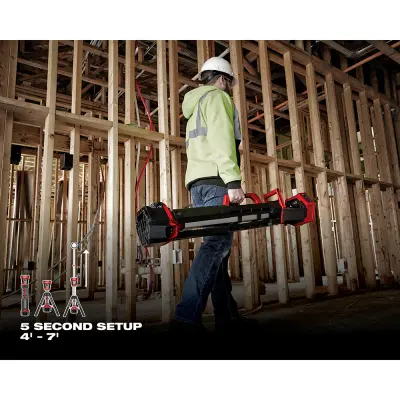
M18 ROCKET™ Tower Light
5-second setup. The jobsite light every tech needs.
Shop at Home Depot →Keep Reading

Got a question? A funny story? A win from the field?
Drop your email and share what's on your mind. Best questions become articles.