
Why Mini-Splits Are Growing
Mini-splits offer zoned conditioning without ductwork. A single outdoor unit can connect to one to eight indoor air handlers, each with independent temperature control. They work as heat pumps in both heating and cooling mode.
The efficiency case is strong: without duct losses — which can account for 20-30% of energy in a typical forced-air system — mini-splits deliver conditioned air more efficiently to the space. High-SEER mini-splits routinely achieve 20-30+ SEER2 ratings.
The application case is also strong: additions, garages, sunrooms, historic homes where duct installation isn't practical, server rooms, multi-family units where individual control matters.
Sizing
Mini-split sizing uses the same principles as ducted systems: Manual J load calculation, or a simplified version for straightforward applications.
Common rule of thumb: 500-700 BTU per square foot for average residential spaces. Adjust up for: high solar load, poor insulation, high ceilings, kitchen, garage. Adjust down for: well-insulated space, mild climate, minimal windows.
Mini-splits are generally more tolerant of some oversizing than ducted systems, because the variable-speed compressors can modulate down without short-cycling. But significant oversizing still causes humidity problems in cooling mode.
For multi-zone systems: the indoor unit capacities cannot exceed the rated capacity of the outdoor unit. Most manufacturers allow some flexibility, but verify with the specific equipment's engineering data.
Line Set Routing
Line sets for mini-splits bundle refrigerant lines, condensate drain, and communications/power wiring from the outdoor unit to each indoor head.
Line set length: Most residential multi-zone systems are rated to 25-50 feet equivalent length per zone. Longer runs require checking the manufacturer's maximum allowable length and refrigerant charge adjustments.
Height difference: Many mini-splits have a maximum height difference between indoor and outdoor unit — commonly 25-50 feet. Verify the limit for the specific equipment.
No cuts in the line set: Refrigerant lines should be continuous runs with no splices. Cuts and fittings introduce potential leak points and are not manufacturer-approved in most cases.
Electrical
Mini-splits require dedicated circuits. Most residential single-zone units need a 15A or 20A 240V circuit. Multi-zone outdoor units can require 30-60A. Always check the equipment nameplate and spec sheet.
The low-voltage communication wire between indoor and outdoor units is specified by the manufacturer. Don't substitute — some systems require specific wire gauges or shielded wire for communication signals to work correctly.
Troubleshooting
Error codes: Mini-splits communicate problems via error codes on the indoor unit display. Look up the codes in the manufacturer's service manual before guessing.
Dripping water from indoor unit: Most commonly a blocked condensate drain. Mini-split condensate drains by gravity — any sag in the drain line or a blocked drain port will cause overflow. Clean the drain and verify slope.
Inconsistent temperatures in heating mode: Below about 35-40°F outdoor temperature, some models experience reduced heating capacity. This is normal — check the equipment's heating capacity curve for low ambient conditions.
Communication error between indoor and outdoor unit: Usually a wiring issue. Verify the communication wire connections at both ends and check for damaged insulation.
Was this helpful?
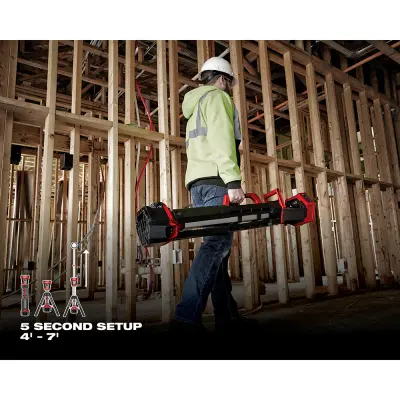
M18 ROCKET™ Tower Light
5-second setup. The jobsite light every tech needs.
Shop at Home Depot →Keep Reading

Got a question? A funny story? A win from the field?
Drop your email and share what's on your mind. Best questions become articles.