
You walk in. Customer says the furnace won't stay on. Runs for a bit, shuts off, runs again, shuts off again. Short cycling isn't one failure — it's a pattern. The first thing to figure out is what kind of cycle you're looking at, because that tells you where the problem lives before you touch anything.
The cycle pattern tells you where to start
Burners run a few minutes, drop off while blower keeps running, then restart → limit or airflow. Burners light for seconds, drop out, retry → flame proving. Inducer starts, aborts, retries → pressure switch or draft. Call for heat disappears and comes back at the thermostat → control-side problem. No faults, quick satisfactions, clean cycles → oversizing, not a repair.
Diagnostic flow
1. Watch one full cycle with a stopwatch.
Time the burner run and the off period. Read the active and stored fault codes. Meter from R to C and from W to C at the board during the event. This one step tells you more than any parts swap.
2. Is the W call steady, or is it dropping?
Before diving into safeties, prove the thermostat is actually holding the call. You should see a steady 24 VAC from R to W at the board during the cycle. If W disappears when the room isn't satisfied, the furnace is doing its job — the problem is the stat, wiring, low-voltage splice, batteries, or cycle-rate setting. Honeywell's recommended cycle rate for 90%+ gas is 3 CPH; faster settings create shorter cycles by design. Jumper R to W at the board to bypass the stat. If the furnace runs normally jumpered, stop chasing safeties.
3. If burner runs then drops with blower continuing, check temperature rise and airflow.
Classic limit cycle. Measure rise across the furnace and compare to the rating plate. Rise at or above the top of the range means airflow, not a bad limit. Check filter, wheel, evap coil, blower speed, zoning, and external static. Return static at 0.4" WC or higher is a red flag on most residential systems. Replace the limit only if rise is normal and the limit still opens early.
4. If burner lights and drops in under a minute, measure flame current.
Meter in series. Typical reads are 2-6 µA, but brand matters: Lennox proves at 0.5 µA and warns below 1.5 µA; Carrier 58MVC runs 0.5-6.0 µA with 4-6 typical; York wants 3.7 µA normal with lockout at 0.9 µA; Trane test pads give 1 VDC = 1 µA. Weak signal means check ground path, polarity, burner carryover, rust, and gas pressure before condemning the rod.
5. If the cycle aborts before or during ignition on a 90+, prove draft with a manometer.
Tee into the pressure-switch tubing. Rheem's rule: draft should run at least 0.1" WC beyond the switch close setpoint. Weak draft means chase the cause — inducer, vent, intake, collector box, cracked tubing, condensate backup. Condensate backups on 90+ units look exactly like pressure-switch faults. Don't replace the switch until you've measured what it's actually seeing.
6. No faults, normal measurements, but cycles are under 5 minutes? Think oversizing.
A clean furnace with short runs in mild weather — no fault codes, rise within spec, static acceptable, stat call steady — is almost always an equipment-to-load mismatch. Not a repair call.
What to say to the customer
Airflow/limit: "The furnace is making heat, but it's building up faster inside than the airflow can carry it away. The safety shuts the burner off to protect the equipment, it cools down, then restarts. So the short cycling is an airflow problem, not a random failure."
Thermostat-side: "The furnace is responding correctly. The heat call itself is being interrupted before the room gets satisfied. That's a thermostat or low-voltage problem, not a furnace part."
Oversizing: "I'm not seeing a failed component. What I'm seeing is the equipment making more heat than the house or duct system can absorb in one run, so it satisfies fast and repeats. That's a sizing or duct design issue, not something I can fix with a part swap. I can show you the numbers."
Common misdiagnosis
Replacing the limit switch without fixing airflow — the limit is usually doing its job. Replacing the pressure switch without measuring draft. Cleaning the flame rod without re-checking microamps, ground, polarity, and carryover. Missing thermostat-side cycling on a clean furnace. Calling oversizing a "repair" when it's a design mismatch that needs a load calculation and a different answer.
Key takeaways
- Pattern-match the cycle type before touching anything. Burner-drop-with-blower-on is different from ignition-abort.
- Prove the W call is steady before diagnosing safeties. A lot of "furnace problems" are thermostat problems.
- Safeties rarely fail alone. A limit or pressure switch that opens is almost always reacting to a real problem upstream.
- A clean furnace cycling under 5 minutes with no faults is usually oversized, not broken. Say so.
Was this helpful?
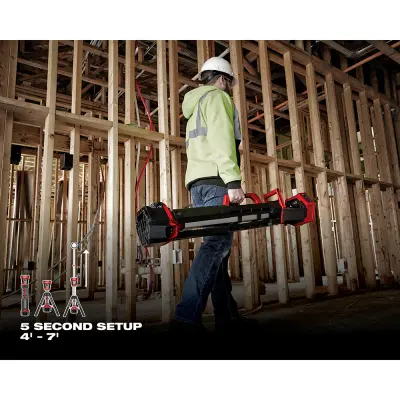
M18 ROCKET™ Tower Light
5-second setup. The jobsite light every tech needs.
Shop at Home Depot →Keep Reading

Got a question? A funny story? A win from the field?
Drop your email and share what's on your mind. Best questions become articles.