
Every HVAC company wants predictable revenue. You want to know what's coming in next month without depending entirely on the weather breaking something. Maintenance agreements are how you get there — and most companies either don't sell them at all or sell them so badly that customers forget they signed up.
Done right, a maintenance agreement isn't just recurring revenue. It's a relationship. The customer stays in your system, they call you first when something breaks, and you get two guaranteed visits a year where you can catch problems early and have natural conversations about upgrades. Done wrong, it's a coupon book that devalues your service.
Why Most Techs Don't Sell Them
Techs skip the maintenance pitch for two reasons. First, it feels like an upsell at a bad time — the homeowner just paid for a repair and now you're asking them to buy something else. Second, nobody trained them on how to present it in a way that makes financial sense to the customer.
The fix is simpler than you think: tie the agreement directly to today's repair so the math does the work for you.
The Math That Sells Itself
Here's the approach that works. Say your maintenance agreement is $199 a year and includes two tune-ups plus a 20% discount on repairs. The homeowner just got a repair bill for $850.
You say: "Your repair today is $850. But if I get you set up as a maintenance member, your 20% discount kicks in on today's repair — that saves you $170 right now. So the agreement basically pays for itself today, and you still get two tune-ups this year and the discount on any future repairs."
That's not a sales pitch. That's math. The homeowner can see the value immediately because the savings are happening right now, not in some hypothetical future scenario.
Structure It in Tiers
One flat plan works, but three tiers work better. Give the homeowner a choice instead of a yes-or-no decision. When people can compare options, they feel more in control — and they almost always pick the middle one.
A practical residential structure looks like this. Your basic tier includes two annual tune-ups and a standard repair discount — maybe 15%. Your mid tier bumps the discount to 20%, adds priority scheduling so they don't wait three days in July, and includes a no-overtime-fee guarantee. Your top tier gets the biggest discount, priority service, and includes minor consumables like filters or basic parts.
Price them so the middle tier feels like the obvious choice. If basic is $149, mid is $199, and premium is $279, most people land on $199 because it has the best value-to-price ratio. That's intentional.
When to Present It
The best time to pitch a maintenance agreement is immediately after a repair, while the homeowner is still feeling the pain of an unexpected bill. They just spent money they didn't plan to spend. Their guard is actually down because they're thinking "I don't want this to happen again."
That's your opening. Not "would you like to sign up for our maintenance plan?" — that sounds like a checkout upsell at a retail store. Instead: "One thing I want to mention before I go — the issue we fixed today is the kind of thing a tune-up catches early, before it turns into an emergency repair. If you're on our maintenance plan, we come out twice a year, keep everything running right, and if something does come up, you get a discount on the repair. Based on what you paid today, the plan would have basically paid for itself."
The other good time is during a new system installation. The homeowner just made a major investment. They want to protect it. Offering a maintenance agreement at installation feels like responsible ownership, not a sales tactic.
Have the CSR Tee It Up
The most effective companies don't wait for the tech to bring it up cold. The CSR mentions it on the phone when booking the call: "Don't forget to ask your technician about the maintenance member discount — it usually saves our customers 15 to 20 percent on today's repair."
Now the homeowner walks in already expecting to hear about it. The tech isn't pitching out of nowhere — they're following up on something the customer was already told about. That small change in sequence makes a massive difference in conversion rates.
What to Say — Scripts That Work
After completing a repair:
"Before I head out — the repair we did today is exactly the kind of thing our maintenance visits are designed to catch early. If you were on the plan, we'd have likely found this during a tune-up before it turned into an emergency. The plan runs $199 a year, includes two visits, and your repair discount would have saved you $170 today alone. Want me to get you set up?"
During a new system installation:
"You're making a solid investment in this system. The best way to protect it and keep the warranty valid is regular maintenance. Our plan includes two visits a year — one before heating season, one before cooling — and it keeps everything running the way it should. Most customers add it on at install so they don't have to think about it later."
When the homeowner hesitates:
"Totally up to you. The way I think about it — you're going to need tune-ups anyway, and the discount on repairs usually covers most of the cost. It's basically prepaying for maintenance you'd do regardless, but with a built-in safety net."
The Long Game
A maintenance agreement isn't just about this year's revenue. It's about keeping the customer in your ecosystem. When their system eventually needs replacement — and it will — they're calling you, not searching Google for whoever has the cheapest quote.
Companies with strong maintenance programs close replacement sales at significantly higher rates because the trust is already built. You've been in their home twice a year. They know your name. They've seen your work. When it's time for a $12,000 decision, you're not competing against four strangers — you're the one they already trust.
Key Takeaways
Tie the agreement to today's repair so the math is obvious and immediate. Structure in three tiers — basic, mid, and premium — so the homeowner has a choice instead of a yes-or-no. Have your CSR mention the member discount before the tech arrives. Present it after repairs when the homeowner is most motivated to prevent future surprises. Think long-term — maintenance customers become replacement customers when the time comes.
Was this helpful?
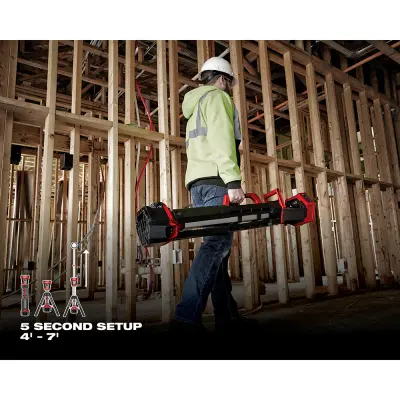
M18 ROCKET™ Tower Light
5-second setup. The jobsite light every tech needs.
Shop at Home Depot →Keep Reading

Got a question? A funny story? A win from the field?
Drop your email and share what's on your mind. Best questions become articles.