
You walk into the call. Blower's running, thermostat's calling for heat, but the air coming out is cool. It's one of the most common heat-season complaints — and it's one of the highest callback rates in the trade, because most techs replace whatever the board points at instead of proving what actually failed.
The three causes that cover most of these calls
Weak or lost flame proving accounts for roughly 30-40% — the furnace lights, can't prove the flame, and drops back out. High-limit tripping from low airflow is another 25-35% — the burners fire, but the furnace overheats because air isn't moving across the exchanger. Draft, pressure switch, or condensate problems on 90+ units cover most of the rest. Work the causes in that order.
Diagnostic flow
1. Watch one full sequence before you touch anything.
Pull the board's current fault code, but don't treat it as the diagnosis. Use it as a direction. Watch the furnace try to run: does it get to ignition? Light and drop? Light, run, then go cool? Each of those sends you to a different step.
2. If it lights and drops, measure flame current.
Meter in series with the flame rod lead. Most furnaces read 2-6 µA at a healthy signal. Brand-specific normal ranges matter here: Carrier 58MVC runs 0.5-6.0 µA (typical 4-6), Trane modern boards run 0.75-3 µA, York wants 3.7 µA normal, Lennox proves at 0.5 µA. If microamps are weak, don't stop at cleaning the rod — check burner carryover, flame impingement, burner ground, chassis ground, and line polarity. Rheem specifically flags polarity and ground as real causes of what techs log as "bad flame sensor."
3. Verify gas valve control and gas pressure.
At trial for ignition, you should see 24 VAC at the gas valve terminals. Manifold pressure on natural gas is typically 3.5" WC — always check the rating plate. Voltage present with no gas flow points downstream: valve, supply, orifice. Erratic pressure points upstream: regulator, supply, or a conversion that was never done right.
4. If it heats then blows cold, check temperature rise.
Classic "started warm, turned cold" complaint. Measure the rise across the furnace and compare it to the rating plate. Rise at or above the top of the range means airflow, not a bad limit. Check filter, coil, blower wheel, blower speed, zoning, and external static. Replace the limit only if rise is normal and the limit still opens early — and know that Goodman/ICP literature treats a limit opening 10°F or more below its setpoint as actually defective.
5. If it stalls before ignition on a 90+, prove draft with a manometer.
Tee into the pressure-switch tubing. Rheem's field standard: draft should run at least 0.1" WC beyond the switch's close setpoint. Weak draft means chase the cause — inducer, vent, intake, collector box, cracked tubing, condensate trap. Don't replace the switch until you've measured what it's actually seeing. And on 90+ units specifically, check condensate management before anything else — a backed-up trap can look exactly like an ignition or pressure-switch fault.
6. Rollout open, or flame moves when blower starts? Stop.
Treat it as a combustion or heat-exchanger problem. Don't reset and walk.
What to say to the customer
If it's flame-proving: "Your furnace is lighting, but the safety control isn't getting a strong enough proof that the flame is stable — so it shuts the gas back off. That's why you feel air but not heat."
If it's airflow and limit: "The furnace is making heat, but it's overheating inside because not enough air is moving across it. The safety is shutting the burners off before damage happens. That's why it starts warm, then turns cool."
If it's draft or condensate on a 90+: "The furnace has to prove it can move combustion gases safely before it keeps running. Right now it's losing that proof, so it's shutting heating down as a safety. On this style of furnace, the drain or venting is usually part of that."
Common misdiagnosis
The biggest callback trap is replacing the pressure switch without measuring draft — actual standalone switch failures are rare, draft problems are common. Second is replacing the high limit instead of fixing airflow. Third is swapping the flame sensor without re-checking microamps, ground, and burner carryover afterward. Fourth, specific to 90+ units: missing a condensate backup that presents as an ignition or pressure-switch fault.
Key takeaways
- Flame proving, high-limit airflow, and draft-pressure-condensate cover most cold-air calls. Work them in that order.
- Use the board code as a direction, not a diagnosis. Prove with instruments.
- Safeties rarely fail alone. If a limit or pressure switch opens, find what caused it first.
- Measure before you swap parts.
Was this helpful?
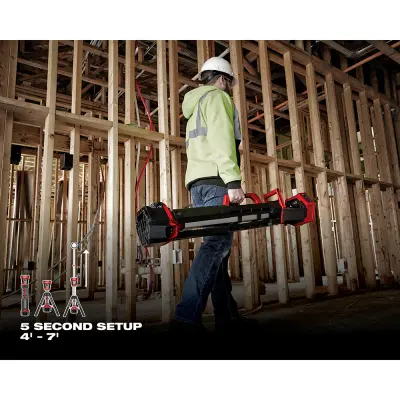
M18 ROCKET™ Tower Light
5-second setup. The jobsite light every tech needs.
Shop at Home Depot →Keep Reading

Got a question? A funny story? A win from the field?
Drop your email and share what's on your mind. Best questions become articles.