
You walk in. Thermostat's set to 72, room's at 58, and nothing's happening at the furnace. No inducer, no igniter glow, no blower. Or the board's alive but the sequence never starts. This is the "dead furnace" call — and it's the one where it's easiest to skip steps and end up swapping the wrong part. Go methodical and it falls apart in about 10 minutes.
The four causes that cover most of these calls
Line power or door interlock interrupted — about 20-30%. Lost 24V from a blown board fuse, failed transformer, or low-voltage short — another 20-30%. Thermostat not delivering the heat call (often a smart stat with C-wire issues) — 15-25%. Open safety string, usually a tripped condensate float, pressure switch stuck closed from the prior cycle, or open limit/rollout — 15-25%. Failed board or board lockout comes last and should only be called after everything upstream is proven.
Diagnostic flow
1. Prove line voltage at the disconnect and at the board.
Meter line-to-neutral at the furnace disconnect: you should see 120 VAC nominal. Then at L1/neutral on the board with the blower door properly engaged. If you lose voltage between those two points, the door interlock or internal wiring is the issue. Door switches look closed but fail to make contact all the time. On Carrier/Bryant especially, the blower door interlock sits directly in the power path — a loose panel makes the furnace look completely dead.
2. Check transformer primary and secondary.
Primary: 120 VAC. Secondary: 24 VAC. If you see primary but no secondary, the transformer is toast. Before you replace it, find what killed it — transformers rarely fail for no reason. A short in thermostat wiring, an accessory like a humidifier or UV light, or a shorted float switch is usually the real culprit.
3. Check the board's low-voltage fuse and R-C voltage.
Visual the fuse, then test continuity. Common ratings: 3A on Goodman GMEC96, 5A on many other platforms. If blown, the fuse isn't the diagnosis — it's the symptom. Carrier/Bryant Status Code 24 says the same thing: secondary voltage fuse open, short in the low-voltage wiring. Find the short before putting in a new fuse. With a good fuse, meter R-C at the board: you should see 24 VAC.
4. Verify the thermostat is actually sending a W call.
Meter W-C at the board during a call for heat. You should see 24 VAC. If R-C is good but W-C is dead during a call, the problem is on the thermostat side — stat itself, C-wire power, wiring, subbase, or a setting. Jumper R to W at the board to bypass the stat entirely. If the furnace runs with the jumper, stop chasing furnace parts.
5. Read the board code, then prove the safety string with voltage drop.
Rheem 3 blinks means limit circuit open. 4 blinks means pressure switch closed during off cycle (stuck closed from the prior call). York 4 flashes is limit open. Goodman 7/8 is external lockout, 11 is limit open/blower failure. Use the code as direction, then meter across each safety in the string while energized: 0 VAC across a closed switch, 24 VAC across the one that's open. That's the fastest way to find the culprit without breaking connections.
6. Don't forget the condensate float.
Easy to miss, huge payoff when you catch it. On a lot of installs the float switch breaks R, which kills thermostat power completely — so a tripped float can look like a dead thermostat. On some 90+ Rheem upflows the blocked-drain switch is in series with the gas valve. If symptoms include "dead stat" or a lockout you can't otherwise explain, check the float and the drain before going deeper.
7. Only after all that, suspect the board.
Line power good, transformer good, fuse good, R-C good, W-C good, safeties closed, and the sequence still won't launch? Now the board is a justified call. Not before.
What to say to the customer
Smart thermostat / C-wire issue: "Your thermostat needs a stable power connection to talk to the furnace properly. Right now it's not getting one, so the call for heat isn't making it through. The furnace itself is fine — the stat needs a proper common wire or the manufacturer's power adapter."
Tripped condensate float: "The furnace is doing what it's supposed to do. A safety switch shut things down because water wasn't draining correctly. I can reset it in about two minutes, but we need to clear the drain or pump so it doesn't happen again."
Open limit or pressure switch: "The switch that stopped the furnace isn't usually the problem — it's the messenger. It opened because the furnace saw something unsafe. I need to find that reason before I decide whether the switch itself actually failed."
Board failure: "I only call a board failed after I've proven it has power, the stat call is reaching it, and no safety is blocking operation. Once those are all correct and the board still won't start the sequence, replacing it is the right repair — not a guess."
Common misdiagnosis
Replacing the board without proving power, 24V, W call, and safeties. Replacing the transformer without finding the short that killed it — you'll blow the new one too. Missing the door switch on a unit that looks completely dead. Missing a tripped condensate float — sometimes a 2-minute fix. Replacing a limit or pressure switch without finding the airflow, venting, or condensate problem that opened it.
Key takeaways
- Work the power path upstream: disconnect → board line terminals → transformer → fuse → R-C → W-C.
- A blown low-voltage fuse means there's a short. Find the short before replacing the fuse.
- A pressure switch stuck closed from a prior cycle will prevent the next ignition. Check both states.
- Condensate float switches cause a shocking percentage of "dead thermostat" calls. Check them early.
- The board is the last suspect, not the first.
Was this helpful?
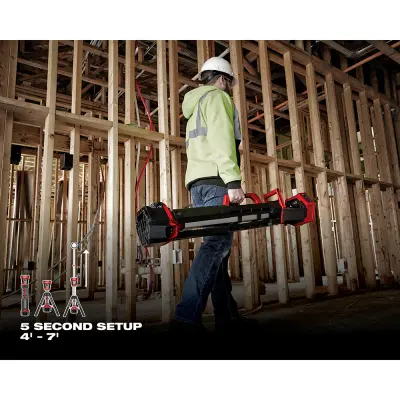
M18 ROCKET™ Tower Light
5-second setup. The jobsite light every tech needs.
Shop at Home Depot →Keep Reading

Got a question? A funny story? A win from the field?
Drop your email and share what's on your mind. Best questions become articles.