
Don't Take Sides
The fastest way to lose this sale is to agree with one person and ignore the other. Even if one of them is clearly more decisive or more engaged, your job is to make both of them comfortable — because you need both of them to say yes.
Treat both as equally important decision-makers. Maintain eye contact with both. Address questions to both. Never let the conversation become a two-person dialogue that excludes the third person in the room.
Understand What Each Person Actually Wants
Most spousal disagreements aren't really about the equipment — they're about different things being important to different people. One person is worried about money. The other is worried about comfort. One is risk-averse and wants to wait. The other is tired of dealing with the problem.
Ask each of them directly what matters most to them. "For you, is it more important to keep the upfront cost down, or to make sure this doesn't happen again for a long time?" Get both answers. Then show them how your recommendation addresses both priorities.
The Repair vs. Replace Disagreement
This is the most common version. Here's how to handle it:
Don't pick repair or replace for them. Present the honest math on both sides.
"If we repair it today, you're looking at $X. That fixes this specific issue. The unit is Y years old, and at this age, we start to see other components fail more frequently. So there's a good chance you're looking at another repair or two before replacement becomes unavoidable. That's not certain, but it's common."
"If we replace it, you're looking at $X. You get a new warranty, a more efficient system, and you take this whole class of problems off the table for 15-20 years."
"Both are completely reasonable choices. The repair is lower risk in the short term. The replacement is lower risk over the next decade. Which framing feels more important to you right now?"
This isn't a hard close — it's giving both people enough information to make their own joint decision. Let them talk to each other. Leave the room if they ask for a moment. That's healthy.
When One Person Trusts You and One Doesn't
Sometimes one person has been working with your company for years and trusts you completely. The other has never met you and is skeptical.
Acknowledge it: "I know you don't know me, and that's fair. Here's what I'd ask: let me show you what I found and what the options are. You don't have to decide anything today. Ask me whatever you want, and if you want a second opinion, I'll tell you what to look for."
That approach disarms the skeptic better than any amount of selling. You've told them explicitly that you're not trying to pressure them. Most reasonable people relax after that.
When They Want to Talk Privately
If one of them says "we need to talk about this," that is a green light. Don't treat it as rejection. Say:
"Absolutely — take all the time you need. I'll step outside. Here's my card, and I wrote the quote right there. Call or text me whenever you're ready, even if it's not today."
Then actually leave. Don't hover. Don't pop back in after three minutes. Give them real space.
Most couples who ask for private time and were genuinely interested come back with a yes.
Was this helpful?
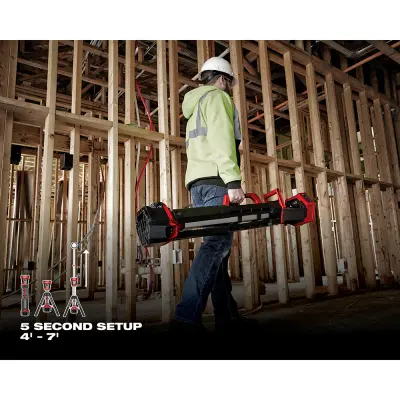
M18 ROCKET™ Tower Light
5-second setup. The jobsite light every tech needs.
Shop at Home Depot →Keep Reading

Got a question? A funny story? A win from the field?
Drop your email and share what's on your mind. Best questions become articles.