Why Working Systems Still Need to Go
Age is the primary factor. An AC unit that's 14 years old and running isn't the same as one that's 4 years old and running. The compressor has been through thousands of start cycles. The refrigerant fittings have been heat-cycling for over a decade. The capacitor and contactor are wearing down.
More importantly, if the system uses R-410A refrigerant, every year it stays in service is a year closer to a refrigerant supply problem. R-410A is being phased down, and prices are already rising. Once a system that develops a leak needs recharging, the repair cost jumps significantly.
Efficiency is the second factor. A 10-year-old 13 SEER system costs considerably more to run than a modern 16-18 SEER unit. Depending on the home's cooling load, a replacement can save $200-400 per year in energy costs. Over 15 years, that difference pays for a significant portion of the new equipment.
Reliability is the third factor. Older systems fail at the worst time — during a heat wave, on a weekend, when parts are backordered. A planned replacement on the homeowner's schedule is infinitely better than an emergency call in August.
How to Bring It Up
You're on a maintenance call or service call. The system is working. Here's how to open the conversation without being pushy:
"Your system is running fine today. I do want to mention that it's [X] years old, and we're starting to see systems this age have more issues year over year. I'm not telling you it needs to be replaced today — but it might be worth thinking about a plan before something actually breaks."
That's it. No pressure, no hard close, no fake urgency. You planted a seed.
Then follow up: "Have you ever thought about what you'd want to do when this one eventually goes? Some people prefer to plan ahead, some prefer to wait. Either's fine — I just want to make sure you have the information if you ever want to explore it."
The Proactive Replacement Conversation
If they show interest, shift into a real conversation. Ask about their experience with the current system:
- Are there any rooms that don't cool as well as others?
- What's your electric bill typically look like in August?
- Have you had any repairs on this system over the years?
Their answers tell you what outcomes to focus on. If their bills are high, efficiency is the angle. If they have hot spots, airflow and equipment matching matters. If they've spent money on repairs, reliability and protection is the frame.
Presenting the Decision as Proactive vs. Reactive
Most homeowners don't realize they have a choice. Help them see it:
"There are two ways to replace a system. The first is proactive — you pick the timing, you compare options, you get it done in the spring before it gets hot. The second is reactive — the compressor fails in July, it's 95 degrees, you need something installed tomorrow, and you're choosing between whatever's in stock."
"Most people who plan ahead tell me it was worth it just for the peace of mind."
Financing as a Bridge
One of the biggest obstacles to proactive replacement is that the system "still works." It's hard to write a check for something that's currently functioning.
Financing removes that friction. A monthly payment of $60-80 per month for a new, efficient system — when they're already paying higher energy bills than they would with new equipment — can actually be cash-flow neutral or positive.
Run the math for them. If their bill drops $30/month and the payment is $65/month, the real out-of-pocket is $35/month for a new, reliable, warranted system. That's an easy conversation.
Don't Oversell
The one thing that kills proactive replacement conversations is pushing too hard. If you create false urgency on a system that runs fine for two more years, you've lost a customer for life.
Be honest. Be patient. Plant the seed, leave the information, and let them come to you. Customers who make unhurried decisions are happier, easier to close, and more likely to refer you.
Was this helpful?
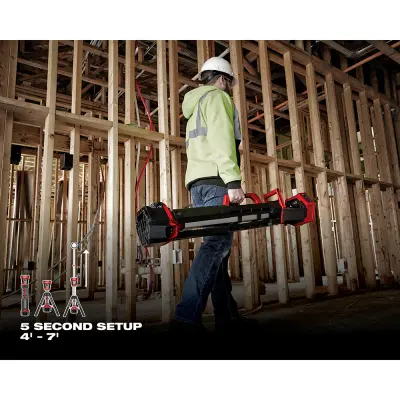
M18 ROCKET™ Tower Light
5-second setup. The jobsite light every tech needs.
Shop at Home Depot →Keep Reading

Got a question? A funny story? A win from the field?
Drop your email and share what's on your mind. Best questions become articles.