
You've been turning wrenches for five, maybe ten years. You're good at it. You diagnose fast, install clean, and customers like you. But you're watching the comfort advisor at your company roll up to the same house, spend an hour, and write a ticket for $14,000 while you made $300 on a repair call last week.
The money on the sales side is real. So is the work to get there. This isn't a lateral move — it's a different job that uses some of the same skills but requires a real mindset shift. Techs who make this transition successfully can absolutely clear $150k. Techs who try it without understanding what's actually changing usually wash out in six months.
Here's what the real path looks like.
The Skills That Transfer
The good news is you already have the hardest part. You know HVAC. You understand how the systems work, what fails, what the install should look like, and what separates good work from bad. That technical knowledge is something the best sales trainers in the industry can't teach in a classroom — and it's what separates a comfort advisor who closes deals from one who sounds like they're reading a script.
Homeowners can smell fake expertise. When a comfort advisor walks in and can actually explain why the old system short-cycles, or why the upstairs is always hot, or why the ductwork is the real problem — that builds trust instantly. You have that. Don't lose sight of it.
The Skills You Have to Learn
Where techs struggle is everything that isn't technical. The actual sales job requires skills most techs have never been trained on — and some they've been actively trained away from.
You have to stop fixing and start advising. On a service call, your job is to solve the problem as fast as possible. On a sales call, your job is to slow down, listen, understand what the homeowner actually wants, and present options. Speed is your enemy. Rapport is the work.
You have to stop over-explaining. Techs love explaining how things work — that's how we learned, by understanding systems at the component level. But a homeowner doesn't need to know what a TXV does. They need to know their upstairs will finally be comfortable. Every technical explanation that doesn't connect to an outcome they care about is killing the sale.
You have to ask for the money. This is where most techs fail the hardest. You can diagnose the system, present three options, and explain everything perfectly — and then not ask for the order. The comfort advisor who clears $150k is the one who gets comfortable saying "want me to get this on the schedule?" without flinching.
The First 6 Months
The first six months are brutal, and most techs who make the transition think about going back. You'll have calls where you do everything right and don't close. You'll have calls where you panic and word-vomit technical details for 45 minutes straight. You'll wonder if you're cut out for this.
Expect it. The learning curve is real.
What you should focus on in the first six months: learning the company's presentation system, understanding the pricing structure, and practicing the core scripts until they come out naturally. Don't try to reinvent the process — learn what works first, then find your own voice within it.
Ride along with the top closer in your company if you can. Watch exactly what they do at the door, during the walk-through, and at the table. You'll notice they talk less than you'd expect, they ask more questions, and they're much slower than a service tech. Pay attention to the pace.
Months 6 to 12
If you make it through the first six months, something clicks. You stop thinking about the process and start running it naturally. You start closing consistent deals. Your confidence goes up, your close rate goes up, and the money starts catching up to the effort.
This is where most advisors stabilize at somewhere between $80k and $110k depending on the market, lead quality, and commission structure. That's solid money, but it's not the ceiling. The jump to $150k+ requires one more shift.
The $150k Mindset Shift
The advisors who clear $150k and up are doing a few things differently from the ones stuck in the $90k range.
They sell add-ons on every call. Not aggressively, but consistently. Maintenance agreements on every repair. IAQ conversations on every install. Humidity solutions when the homeowner mentions dry air. They're not trying to force anything — they're just asking the questions every single time. Over a year, those add-ons add up to real money.
They work harder at rapport than at pitching. The top closers spend more time asking about the family and walking through the house than they do presenting options. By the time they sit down at the table, the homeowner already trusts them. The close is the natural result of trust, not a separate event.
They don't negotiate against themselves. When a homeowner pushes back on price, they don't immediately offer a discount. They explain what's included, ask what concerns the homeowner, and let the value conversation happen before touching the number. Advisors who drop price the moment they hear resistance train their customers to always ask for a discount.
They do pre-call and post-call work that the mediocre advisors skip. They research the address, check neighborhood averages, prep their presentation materials, and follow up on every lead personally. That extra 15 minutes per call compounds over a year into thousands of dollars.
The Income Reality
Let's talk about the actual numbers because techs deserve honest information about what this looks like.
First-year advisors typically earn somewhere in the $60k to $85k range depending on the market, the company, and how fast they pick it up. This is usually a pay cut from what a senior tech makes, which is why most techs quit during year one.
Second-year advisors who've figured out the job usually land between $85k and $115k. This is where most people settle in, and it's the point where the transition actually feels worth it.
The $150k+ advisors are the ones who've put in the reps, built a referral base, mastered add-on sales, and understand how to read homeowners. It usually takes 2 to 4 years to get there, and it requires commitment to continuous improvement — not just showing up to calls.
The top 1% of HVAC comfort advisors clear $200k+. Those are the ones who've turned themselves into the kind of advisor who gets requested by name and generates their own referral pipeline. That level exists. It's not hypothetical. But it takes years to build.
What Kills the Transition
Most techs who fail at this don't fail because of the technical side. They fail for a few specific reasons.
They stay in tech mode. They walk into the house and immediately start diagnosing instead of building rapport. They lead with technical details instead of outcomes. They treat every call like a service call with an option to sell at the end, rather than a sales call that includes a diagnosis.
They don't ask for the sale. This is the single biggest killer. They do everything right for 90 minutes, present three great options, and then wait for the homeowner to offer to buy something. The homeowner never does. The advisor leaves with a "we'll think about it" and the deal goes to someone who actually asked.
They take rejection personally. Sales is a numbers game with emotional weight. You will hear no. A lot. The advisors who thrive learn to separate their self-worth from the outcome of individual calls. The ones who don't burn out in six months.
They compete on price instead of value. When a homeowner mentions a lower quote, the weak advisor immediately drops their number. The strong advisor explains the difference and lets the homeowner decide. If you drop price to win deals, you're training homeowners to negotiate against you forever.
Is This the Right Move For You
The path from tech to $150k+ in sales is real, but it's not for everyone. If you love being in mechanical rooms and solving technical puzzles, moving to sales will feel like a demotion even if the paycheck is bigger. If you hate talking to people and find small talk exhausting, you'll struggle.
But if you like people, you're naturally curious about what they want, you can stay calm under pressure, and you're willing to put in the reps to learn a new skill set — this can absolutely work. The money is there. The question is whether the actual day-to-day job sounds like something you'd enjoy doing.
Try to ride along with a comfort advisor for a full day before you make the move. See what the job actually looks like. That one day of observation will tell you more than any article or training material.
Key Takeaways
You already have the hardest part — technical knowledge that most salespeople lack. The skills you need to learn are rapport, presenting options, and asking for the money. Expect the first six months to be brutal — that's normal, not a sign you should quit. Most advisors stabilize at $85k-$115k in year two; the jump to $150k+ takes 2-4 years of sharpening the craft. The biggest killer is staying in tech mode instead of slowing down and building rapport. Ask for the sale every time — the advisors who fail are usually the ones who do everything right except close.
Was this helpful?
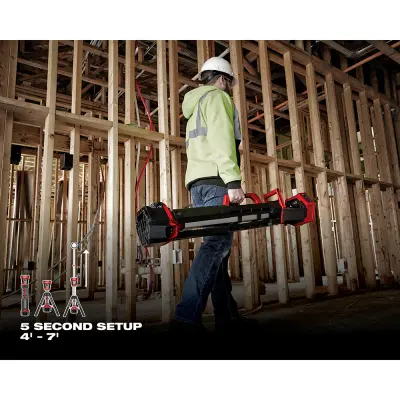
M18 ROCKET™ Tower Light
5-second setup. The jobsite light every tech needs.
Shop at Home Depot →Keep Reading

Got a question? A funny story? A win from the field?
Drop your email and share what's on your mind. Best questions become articles.